Monday, June 19, 2017

My Top #doitcheap Tip for Weight Loss (it's totally free!!)

Probably my biggest tip for being fabulous on the cheap is how I work out. I do hours of different work out every day, at zero cost.

I want to first clarify that I wasn’t always into fitness. In fact, just a year ago if you asked me if I liked exercise, I would have laughed my butt off. I hated it! My go-to method of weight loss and having a decent body was starvation or purging. Not the healthiest weight management plan. But I finally kicked both those habits and found myself putting on the pounds.

I was still technically a healthy size, but I wasn’t happy in myself. On top of that, I was also experiencing a lot of stomach problems. I decided in September of 2016 to make a change. I was going to commit to exercising and eating the right foods, and I was going to stick with it.

My Youtube abs
 (not a 6-pack but good)
I started off by doing a two-week gluten free cleanse to see if that helped with the stomach issues I was experiencing (it didn’t). And I set myself the goal of working out every other day, or at least three times a week.

I had no clue how to exercise. I had no cardio stamina, couldn’t lift puny weights, and basically was really unfit. I was still only working my part-time job at a daycare/nursery, and my partner had just lost their stipend for their PhD. Money was extremely tight.

What many people would do in this situation is join a gym, take some fitness classes and possibly get a personal trainer to get them on the right track. But I couldn’t afford a gym membership! The cheapest gym I found cost about $18 or £16.99 a month. That was roughly the cost of my cell phone bill. I had to ask myself, which did I NEED, a cell or gym? Obviously, my choice was my cell phone. I also didn’t relish the idea of working out in front of a bunch of strangers.

Where did that leave me? I was someone who had no experience in exercise, and couldn’t afford a gym. People who are gym shy like me might join an online accountability/exercise program like Beach Body, The Fit Body Guides, or Bikini Body Guides. But those can cost more than a gym membership, which doesn’t help me in my #doitcheap lifestyle.

So, I found a #doitcheap way. I started off by looking at pins on Pinterest that had workouts sheets. I then discovered two things. I didn’t know a lot of the moves and it was hard to pause mid workout to check what I was supposed to do next. For the first problem, I went to Youtube.

And that is when I had my stroke of genius. Youtube is for more than just funny video’s of cats! Youtube has thousands upon thousands of workout videos and demonstrations. I didn’t need to plan anything, I simply had to sign in to Youtube, and google the workout I wanted for the day.

I built this butt off of Youtube!
I started off with doing 20 minutes weight loss yoga video’s. After a few week’s I noticed my stamina and strength were up, so I switched to more cardio intensive video’s. Gradually I built up to 30-45 minutes workouts, 5-6 times a week. On a Monday, I might do a strength training video (you can make weights), the next day yoga, and the next day a fitness class that involves barre and dance!

I’ve been following my Youtube fitness regime for about nine months now. My stamina is better, I can visibly see my leg and ab muscles. I can squat like a pro. And my butt has doubled in size! Colleagues ask me if I am wearing butt pads (no joke). It has also helped me cope with my depression and simply by exercising, I find that I lean towards healthier food choices.

So, if you want to exercise a bit more, but don’t want to or can’t afford the gym or online programs, then do Youtube! It is a true #doitcheap way of life. I’m going to start reviewing Youtube exercise video’s for you here, and you can choose to do them after my review or not. I’ll include some images from my workout, the link to the video, the good and bad parts, hardest moods, and overall give you details about it.

I hope you enjoy your new #doitcheap way of fitness! 

Sunday, June 18, 2017

The #doitcheap Lifestyle That Will Revolutionise Your World

I recently realized that I’ve gotten quite good at living life on the cheap. I’m a starving writer, I work a part-time job that I don’t love to pay the bills for my partner and me while I chase my passion. Someday I hope to support myself solely with my written word, but that isn’t today. Today I must buy food, pay rent and bills, for two people all on a salary that is well below the poverty line. It isn’t easy, but I’ve always strived to live as inexpensively as possible.

I’ve been buying my own clothes and makeup since I was 13 and my mom didn’t agree with my fashion choices. I made cash by baby-sitting and saved the Christmas money I was given by family, and spent it sparingly. I developed certain shopping rules. I would only buy clothes and accessories that were on clearance and usually less than $10. I bought candy and snacks from whole sale cheap grocers that sold the damaged packaging food that main brand grocers wouldn’t stock because it wasn’t visibly appealing. I rarely went to the movies. All my books and DVD’s were borrowed from the library or bought second hand. These are all shopping norms that I have continued to carry with me throughout my teen years and into my 20’s and have proved vital to maintaining a fabulous life on the cheap.

Many people blog about their DIY (do it yourself) and how it saves them money, makes their home/clothing look great, and how wonderful it is. I’m not opposed to a little DIY, I frequently alter old clothes to update them. But I’ve discovered that a lot of DIY costs more money than I am prepared to pay. The popular DIY projects you see on the internet involve craft supplies most people don’t have on hand, or tools like sewing machines that I simply can’t afford right now.

So I realized that I am very similar to the DIY savvy ladies, except I just DIC (do it cheap). If making something look better with the DIY emthod is cheapest, trust me I’ll do it. But I find that by shopping at thrift shops, hitting the big sales, and basically always scrounging for a bargain, I live a much cheaper life. I truly believe that I will abide by this low-cost lifestyle even if I am a multi-millionaire someday. Why spend more on the same product that I can get for cheaper, used or make myself?
I consider myself a fairly fashionable person, I love to read magazines, have a huge wardrobe, and shoes are my biggest obsession. I’m a bit high maintenance in my looks, I enjoy having nice hair, being well groomed and having a well-toned body. I frequently am complimented on my physique, hair, makeup and clothes. Usually I just smile and say thank you, without revealing how I look so good, for so cheap because I’m afraid of being judged for my cheap methods. But now I’ve decided to share my secrets.

So follow me on my journey of showing how I stay fabulous on next to no money, . The #doitcheap or #dic lifestyle 

Wednesday, June 14, 2017

Fish Sammies: An Explanation of the British Bread Complex


In general, America is the winner of the food game. We deep fry everything, Twinkies, cheese, pasta, Oreo’s, basically everything is better if deep fried. Our pizza’s are bigger, our cakes have more frosting, and we make it all over the top. But, lately, I feel like the UK might have us Yanks beat in the sandwich department.

British people take their sandwiches seriously. They even have special bread just for making toasted sandwiches, which they call “toasties”. This special bread is more aerodynamically designed to get maximum toastage while still maintaining a softer inside to bite into. It is a science, someone I work with can even tell regular sliced bread from toastie sandwich sliced bread. Apparently, all breads are not created equal. (This same person can actually smell when I am making toast at work, she stops by the kitchen to point out how nice it is, toast is like perfume to her)

I’m not joking when I write that the British have made their sandwich forming into a science form. They have even designed a method of avoiding sogginess so sandwiches last longer. In the US, if you are making a standard lunch sandwich, you would have two slices of bread, put on some meat, then maybe put on some condiments like mayo or mustard. However, by the time lunch rolls around, you might notice your sandwich has gone soggy! The horror! (Especially if you use American Wonder Bread or white bread, which British people think tastes like slices of cake.)

The Brit’s have solved the soggy sandwich problem. I wondered for over a year why people at work put butter on bread before adding their sandwich ingredients. I thought they just really like butter. Recently, my partner explained that it is because by first putting on butter, it creates a barrier between the bread and other condiments and meats! Thus, your bread won’t get soggy! My mind was blown. (And yes, I tested it and noticed the sandwiches are fresher with butter, but I still don’t like the taste enough to frequently butter my bread.)

Butter aside, the Brits put some other weird stuff on their sandwiches. They will eat straight up bread and meat, no condiments to add moisture. Bread and potato chips/crisps sandwiches. Subway here sells Indian curry meat on sandwiches. Shrimp in mayo is a popular sandwich choice. Sausage and egg on a baguette roll is a staple of my partner’s diet. But by far one of the strangest sandwich toppings I’ve seen in England is fish fingers!

Yes, the kids I work with love fish finger sandwiches. By fish fingers I am referring to the healthy replacement to chicken nuggets our parents tried to trick us with when we were kids in America. I always ate mine doused in ketchup to make it palatable. Well here, children and adults love the stuff. And as a snack or lunch option, they will make a fish finger sammie. (Sammie is British slang for sandwich). To make a fish finger sandwich you first take two slices of bread (usually white sliced bread, not necessarily toastie bread) with both slices fully buttered. Then you put on at least three fish fingers, and smash the slices of bread together to create a sammie.
I tried it for the first time at work. I enjoy the occasional fish fingers, and I kind of like bread. So, I thought I would probably enjoy the two in combination. I was wrong. I did it up right too, I had the bread slathered in spready butter. The bread combined with the bread crumbs on the fish fingers was just too much for me. It all blended into a white mess. Add in the butter and I felt like I was clogging my arteries with every bite. (This is coming from an American who once did a shot of garlic butter dip on a dare, and enjoyed it) After two bites, I took my sammie apart and just ate the fish fingers.


In conclusion, fish finger sammies are definitely a British tradition I will not be getting on board with. When it comes to sandwiches and sandwich making, American’s need to bow down to the superior knowledge of the British. And lastly, if you want to preserve your sammie, add butter!

Sunday, May 28, 2017

China Trumps America in Healthcare: An Explanation

The magic access to universal
healthcare
I’ve been on a bit of a social policy theme recently, my previous posts have focused on government sponsorship of museums and health care, so I thought it would be apt to continue that trend.

Many of you are likely unaware that I have not only lived abroad in England for several years, but I also spent three years in China as well. Many Americans, and British as well, are unaware of what goes on within the Chinese government. Whenever I am able, I try to educate other’s about how the Chinese government functions, and how it isn’t the big bad the media frequently makes it.


Health care in China isn’t as desire as Western countries might believe. China is looked at as an unstable, impoverished nation, where citizens are neglected. However, in many cases the opposite is true. The Chinese government owns and sponsors most of the medical facilities within its country.

The Chinese healthcare is a middle ground between the British and USA system. In America, medicine is entirely private. People have private insurances that only allow its clients to be treated by doctors within their members network. Frequently, people want to see one doctor, but can’t because it isn’t on their insurance approved list. In addition, American’s also bare a large majority of the burden to pay for any medical issues. However, if treatment is needed, a person can usually be seen by a specialist within a couple weeks at most.

The opposite can be said of Britain. All healthcare is paid by the government, and citizens are free to see whichever doctor is within their zip code area. If specialist treatment is needed, that is too is paid for. The negative side to free medicine is there exists massive wait list for doctor’s appointments. I’ve been waiting three months to see a specialist.

The British 'National Health Service'
Within China, I would argue, many citizens have greater access to healthcare than American’s (a controversial statement). People’s workplace or university usually has a medical center on site, sponsored by their employer or the government. However, unlike in England but like America, citizens do still have to pay some of their medical costs. The government sponsorship of hospitals and facilities lowers the cost overall for its citizens, making it more affordable. Likewise, to the USA, there isn’t significant wait times to be seen by a doctor or at a hospital. If you can pay the cash cost of whatever treatment you might be needing, then you get seen. My brother scheduled and receive an eye surgery in the space of a week. A struggle within the Chinese system is that if someone is unable to afford an expensive procedure, they must go without.


I do not imply that the Chinese system is the perfect balance between in England and America. I simply aim to inform my readers what the Chinese, American and British healthcare system is like, and the flaws for each. I believe that no country has a perfect healthcare or government system. But I find the wide variances between different places and different methods thought provoking. See my graph to better understand some of the similarities and differences between all three countries. 


United States of America
United Kingdom
China
Type of Government
Democracy
Democracy with Constitutional Monarchy
Communist State
Type of healthcare
Private insurance paid for by individual
Universal healthcare funded by government
Medical institutions funded by government/employers with payment from individuals
Wait Times for Treatment
Minimum, individuals usually seen quickly
Quite long for specialized treatment
Minimum, individuals seen quickly
Dentistry
Not always included by insurance, significant amount of personal payment (very expensive)
Funded by government with small payments from individuals for treatment
Funded by individuals, but fairly low cost
Opticians
Not always included on insurance, significant amount of personal payment (very expensive)
Funded by individual, however prices are kept low for exams, eye glasses and contacts
Funded by individual, costs are kept very low for eye glasses
Sexual Health
Paid for by individual or insurance (can be very expensive for STI checks and birth control)
Funded entirely by government
Funded and encouraged to be used by government


Sunday, May 21, 2017

Hypochondria: The American Terror of Illness


A bedazzled sprained wrist 
Middle class or lower class American's have a fear of illness. It is almost like hypochondria, a paralysing terror that you will get sick. Not because the physical pain or suffering scares them, but because of financial woes. I've lived with this fear. I was lucky to enough to have state health care because my parents were divorced as well as being on my father's health care plan. So I had good coverage, although I still had co-pay's* and deductible's* to contend with. When I turned 21, my father took me off his insurance, and I was one of the millions of American's with no health insurance. Luckily I moved to England six months later, but those were a stressful six months.

No health insurance makes you live in terror of the flu. A simple thing, like a broken leg, would have bankrupted me if it happened during my months of no coverage. For six months I was in constant fear of getting an injury. I couldn't pay for a blood draw, let alone an emergency visit.

This fear is something British people don't understand.  My partner and I recently visited my family in the US and my younger brother got sent home from school, because staff were concerned that he might have strep throat. My siblings only had emergency coverage (insurance would only pay if they went to the ER) and my parents had no insurance at all. Immediately, my mom went into panic mode. She started calculating how she would pay for him to have blood draws, throat cultures, medicine, etc if he really had strep. My partner stood back in shock, and quietly asked me why we were so upset. So, I explained that if my brother had strep throat, it could cost my family thousands of dollars in medical fee's that they were solely liable for. His jaw dropped.

He is British. He has never had to pay to go to a doctor's office, or an ER. A blood test has never cost him a dime. He has never had to think about money and health. In the United Kingdom, there is universal healthcare*. He can go to the hospital and get seen, then leave without swiping his credit card.


Another injury I never got
treated
The first time I went to the doctor in England, I didn't truly believe that it was free. After my appointment, I awkwardly waited around the receptionist, waiting for her to tell me I at least had to pay a small fee. It never happened. I've had numerous doctor's appointments, specialist meetings, and therapist sessions, all for free since I've lived in England.

However the fear of affording to be sick has never left me. I avoided going to the doctor's for half a year although I was having severe stomach problems. In my mind, I could live with the pain, so I should deal with it on my own. It has been bred into me by American society to only seek medical aid if absolutely necessary. Twisted ankle? Wrap it yourself. Deep cut to the knee that could use some stitches, slap a band aid on it.

Ankle injury I never saw a
doctor about
Why is it that the American government is so against universal healthcare? The private health care system benefits no one. The doctors drown in medical debt, and pay premium prices for liability insurance against law suits. Most American's suffer with chronic illness rather than go to the doctor because of the high costs. Many have the bare minimum of insurance coverage because they can't afford better. How is this system desirable?

President Trump plans to do away with Obamacare, which is just a drop in the barrel of changes the American medical system needs. Obamacare requires everyone to have health insurance and somewhat lowers the cost of insurance for lower income people. To do away with that, people would again have no protection from injury.

Countries like Canada and England are a prime example of universal healthcare working for the better. It hasn't bankrupted their government, it hasn't caused unrest or crippled society. In fact, universal healthcare has only made the country stronger. So, why are American politicians so against transferring to this system? The private system hurts everyone, and forces the countries people to live in fear.

I am grateful that I live in England and have access to free health care. I might be dead without it. But rarely does a day go by that I don't think of my family and friends that still have to suffer with illness and go without medical treatment, because of the American private healthcare system.

*Co-pay: A fee that American's must always pay when they go to any medical center, even if they have insurance.
*Deductible: The amount of costs American's must cover of their own medical expenses before their insurance will step in and pay the remainder of the costs.
*Universal Healthcare: A system where the government of a country pays all the medical costs of it's citizens, the government funds medical institutions from taxes and funds. Citizens never have to pay for seeing a doctor, getting surgery, or treatment.

Monday, May 15, 2017

When Did America Start Putting Price Tags on Culture?

           Last week I took a mini-vacay around London and to Paris. I was lucky enough to have an old friend from Loyola University come to Europe for a two week visit. Now, I work part time to support my writing career and I couldn't swing a the full break with him. But I took three day's off and managed some time in France. I was nervous about paying for the holiday. It was my friends first time travelling internationally, so he wanted to see everything. I mean EVERYTHING!! All the museums, national monuments, churches, he wanted to go all over the cities.

          The cost of all this was concerning. As I said, I work part time at a nursery/daycare to support writing books and blogging. So paying for extra trips isn't easy. This trip included hostel stays, flights, trains, public transportation, food, AND all the places my friend wanted to see. I wasn't sure how I could managed it.

          I guesstimated that I would have to pay at least a hundred and fifty pounds, if not more on museums and monuments alone. I started to research which museums were going to cost me the most. And I stumbled across a surprising thing. In London, my friend wanted to see the British Museum, the National Portrait Gallery, Science Museum and a bunch of other places. This was only the first part of my trip and I thought I had at least fifty pounds in expenses. BUT it was all FREE. The museums in England are all free! Not just to British citizens, or EU citizens, but to everyone. Naturally, there is a suggested donation but not required.

        In America, museums are rarely free. Especially not the major ones in big cities like New York City or Washington D.C. Occasionally, kids museums are free to children and their parents. (one major exception is the Smithsonian institution) But otherwise, American's are capitalist to the bone and they want to charge everyone to view their treasures.

British Museum: Free------------------------- Newseum: $22.95
National Portrait Gallery: Free ------------ Metropolitan Museum of Art: $25
National History Museum: Free -------------- American Museum of Natural History: $22

Look at the cost of simply going to a museum in the US. It's astronomical. It would take someone working federal minimum wage at least 4 hours of work to earn a ticket to just one of these places.

Once I realized visiting all these places was free, the stress of my trip eased. But I can't understand why is it free here in England, but costs so much to visit cultural places in America?

I truly think that many children grow up to be more narrow minded in the US because they don't get access to cultural things that will open their minds to the bigger world. In the UK children frequently take school trips to London to see the museums or even to Europe to be exposed to new things. The biggest trip my brother has gone on this year has been to the Kansas City Zoo with school. If children are kept in a small sphere and view of the world, how will they ever progress their ideas?

This might seem like a reach, to suggest that lack of access to free museums and educational experiences is the cause of racism, or sexism, or hatred towards foreign concepts in many American households. But just consider it. If a child only hears and see's what their parents believe, and doesn't see what people from other walks of life can do and create, what else can they believe but what their parents do and say? The more exposure children have at a young age to cultural differences, the more likely they are to accept differences in people.

I think America has failed in making museums, and access to art, history and science cost so much that people below middle class can't go to them. Art shouldn't come with a price tag to simply view it in a public space, Parents shouldn't have to pay for their children to learn about space and see artefacts from space travel. Culture shouldn't cost.

Monday, May 1, 2017

The Brexit Diet, How Britain is Losing Weight Fast

Two things have been in the political news constantly in recent months. The first is Trump, his election/presidency, and the second is Brexit.

Everyone in the United Kingdom and the European Union is aware what Brexit is, and how it will have lasting effects on all countries and governments involved. However, I believe that people outside the European bubble don’t understand what Brexit is, or why it matters.

Brexit is a nickname given to a referendum passed in the United Kingdom to formally remove the UK from its membership with the European Union. It would be a large loss of weight and muscle for the UK that may or may not be a positive thing. The European Union is a collection of countries that maintain sovereignty within their countries, but agree to have representatives work together in a group to decide laws and regulations that benefit all countries. Some of these regulations include


  • ·         freedom of movement for EU member citizens to other member countries
  • ·         food regulations like banning damaged fruit from being sold, not allowing high fructose corn syrup in foods, etc.
  • ·         providing universal healthcare to citizens in all EU countries (like the British NHS)
  • ·         putting additional taxes on certain goods (tampons for example)


Overall, the EU functions to make all its member countries better. They want all citizens in member countries to have equality, and as a union, it helps the countries’ economies work together more symbiotically. It was founded in 1973, and (currently) has 28 member countries.

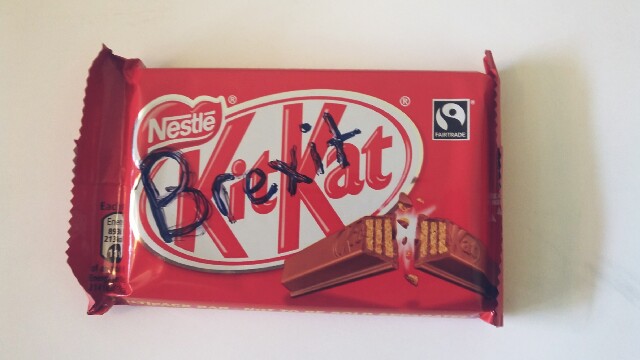
This is all well and good. Most people in the EU agree that it is hugely beneficial to their country financially and in many other ways. The UK is a country that doesn't share this sentiment. I like the analogy of a Kit Kat bar to describe what is happening with Brexit. A Kit Kat candy bar is delicious, it tastes wonderful. The UK wants to break itself off the entire candy bar, and be its own piece of candy. Now it doesn’t have the support and benefits of being a whole candy bar. Which would you prefer, an entire Kit Kat, or only one bar that is divided and broke?

 In 2016, the UK voted on whether or not to stay a part of the EU. A little over 50% of the country voted to leave. Most those that voted to leave were the elderly population, many of those who had voted against joining the EU in 1973. The two biggest reasons I have heard for people voting to leave is they think the UK will be better off financially after not having to pay taxes and membership fees to the EU and that it will prevent foreigners from easily moving and working in the UK. 

Honestly, the desire to close its border’s is the most vocal cause of Brexit from what I’ve been told. (Which is offensive as a foreigner) Many people believe that Europeans are taking British jobs and resources, so they shouldn’t be allowed in.

Following the Brexit vote, the country has been in political turmoil trying to figure out what that means. What concessions will the UK have to make to leave the EU? Is it legal to leave based solely on citizen’s vote? How will this affect the UK’s economy? (The pound dropped to its lowest value in over a decade the day after this vote was passed)

The Prime Minister (UK version of President) at the time of the Brexit vote was Boris Johnson, he has since resigned because of how Brexit went down, so Theresa May replaced him. May has now called for an early election, to legitimize her position as the Prime Minister and grant her party more power. The government claims that the UK will formally be finished with the EU by 2019. 

Scotland doesn’t like this break. The Scottish people didn’t vote pro-leaving the EU. Therefore, Scotland is now thinking of redoing it’s vote to leave the United Kingdom, so it can stay in the European Union.

Brexit is a massive diet for the UK. By cutting its calories (ties) with the EU it will lose the weight of immigrants, paying EU fee’s, having to follow EU regulations in health and food, as well as many other restrictions. But as with many diets, there will be side effects. The UK will lose its open access to EU member country’s economies, and it will breed anger and dislike among the member countries. Furthermore, Brexit might cause a dangerous weight loss that wasn’t anticipated, it may break the United Kingdom in half.

Early in this post I mentioned that Brexit is like a Kit Kat bar, the UK is breaking off a piece of the candy. Brexit might cause a further break in the single Kit Kat piece when Scotland potentially leaves the UK and moves goes back to the EU. Leaving the UK half of a broken candy bar. 


To sum up, keep your Kit Kat whole, diets that cause weight loss can be good, but when a diet is taken too far, it only harms the dieter. Brexit isn’t in the favor of it’s the UK. It will cause far more harm than good. Alas, I’m just an American bearing witness to this moment in political history. I have no vote in the decision.

Rest Yo'Self

Frequently when I am reading fitness posts, blogs, etc. rest periods are not mentioned enough!! I'm not referring to a rest day or two, ...